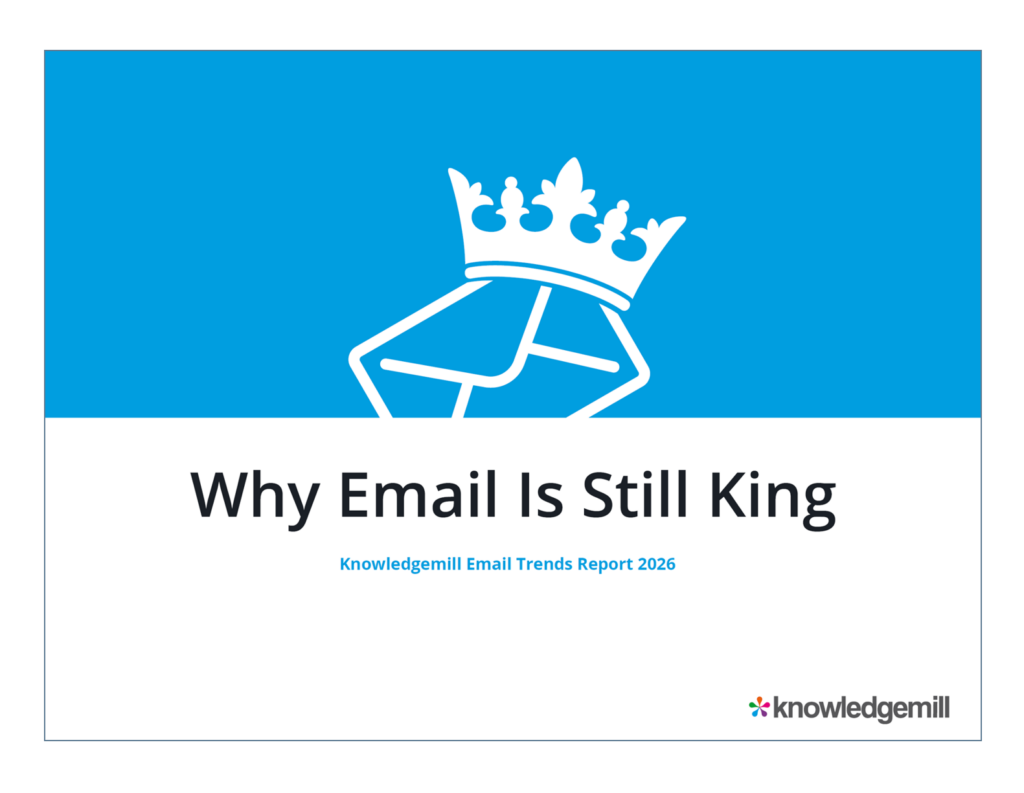
Despite the rise of AI assistants, collaboration platforms, instant messaging and social media, one business tool continues to dominate organisational communication: email. Our Email Trends report explores why email remains the backbone of modern business operations in 2026, and why organisations that fail to manage it properly risk losing productivity, knowledge, compliance and competitive advantage.
The report, Why Email Is Still King, takes a deep dive into the evolving role of email in today’s digital workplace and explains why businesses should stop treating email as a personal productivity problem and start viewing it as a strategic business asset
Email Hasn’t Disappeared — It Has Become More Important
For years, predictions circulated that email would be replaced by chat apps, collaboration platforms or AI-driven workflows. Yet the opposite has happened.
Email remains the primary system for communicating with customers, suppliers, partners and regulators. More importantly, it continues to hold some of the most valuable and business-critical information organisations create every day. Industry research suggests that as much as 75% of organisational knowledge still resides within email conversations and attachments.
The challenge is no longer whether email matters. The challenge is whether organisations can effectively manage the enormous volume of information flowing through inboxes every day.
What the Report Covers
The report explores several major themes shaping business communication in 2026, including:
- Why email remains the most trusted and auditable business communication channel
- The hidden cost of unmanaged email data
- How AI initiatives fail when email data is inaccessible or poorly organised
- The compliance and governance risks created by siloed inboxes
- The growing need for intelligent email management
- How organisations can reduce storage costs and improve accessibility
- Why integrating email into wider knowledge and document management strategies is now essential
It also examines how businesses are adapting to increasingly complex compliance, security and data governance requirements while dealing with growing communication overload.
A Few Key Findings from the Report
Email Is Still the Largest Untapped Knowledge Source
One of the strongest themes throughout the report is that email is no longer “just communication.” It is organisational memory. Critical decisions, approvals, project discussions, client instructions and commercial intelligence are often buried inside individual inboxes. When that information is not centrally managed, businesses create major operational and compliance risks. The report argues that organisations investing heavily in AI while ignoring email data readiness are building strategies on incomplete foundations, a concern increasingly echoed across the industry.
Poor Email Management Is Quietly Damaging Productivity
The report highlights how much time employees still spend searching for emails, attachments and information scattered across inboxes and disconnected systems.
This issue becomes even more serious in sectors where communication history is critical, such as legal, construction, insurance and financial services. Our research outlines how intelligent filing, automated classification and centralised access can dramatically reduce wasted time while improving collaboration and customer response times.
Compliance Pressures Are Increasing
As organisations face stricter governance, audit and data protection requirements, unmanaged email creates significant exposure.
The report explains why businesses can no longer rely on employees manually storing important communications correctly, especially when hybrid working, mobile access and fragmented systems are now standard operating environments. Centralised and searchable email management is becoming essential for compliance, auditability and operational resilience.
Storage Costs and Data Sprawl Are Becoming Unsustainable
The report also reveals the scale of duplication and unnecessary storage sitting within enterprise email environments. We discuss how intelligent deduplication and centralised storage strategies can significantly reduce cloud storage requirements and associated costs, while also supporting sustainability objectives.
Why This Matters Now
2026 is shaping up to be a turning point for organisational data strategy.
Businesses are racing to implement AI, improve knowledge sharing and strengthen governance. Yet many still overlook the largest and richest source of operational knowledge they already own: email.
As the report makes clear, organisations that modernise their approach to email management will be better positioned to:
- Improve productivity
- Reduce operational risk
- Strengthen compliance
- Enhance collaboration
- Support AI readiness
- Lower infrastructure costs
Those that do not may continue struggling with fragmented information, duplicated effort and inaccessible institutional knowledge.
Download the Full Report
Why Email Is Still King provides a practical and thought-provoking look at the future of business communication and information management.
Whether you are leading IT, compliance, operations, corporate information management or digital transformation initiatives, the report offers valuable insights into why email still sits at the centre of modern business infrastructure.
Read the full report here